Ancient times
The ancient city “Kydonia” was established at the same location with Chania. However, N. Plato placed at the same location the prehistoric city of Alchania, which is probably the reason for the name of the modern city.

Venetian – Turkish domination:
The city for many centuries was considered a settlement of no significant importance. However, this settlement was boosted after the 4th Crusade (1204) and specifically in 1952 from the Venetian settlers, who settled in Kastelli and fortified it. During the Venetian-Genoates war, the Genoates attempted to conquest the city (1296) by bombing it. The first fortification of Chania was completed in steps and the major one, started in 1536,  with design from Venetian architects. Two years later Harientin Barbarossa laid siege to Chania without success, thanks to the powerful Venetian artillery and the heroism of the locals.
with design from Venetian architects. Two years later Harientin Barbarossa laid siege to Chania without success, thanks to the powerful Venetian artillery and the heroism of the locals.
The Turkish, after ransacking the area of Kissamos, they turned against Rethimno and finally gave up. During this period, Chania and Chandakas (Heraklion) was the major cities of Crete and were exporting goods to Venice, Constantinople, Corfu and Nice.
In the meantime, the propagation of the Turkish occupation in the south Aegean Sea and Cyprus forced Venice to boost its fortifying projects on the island and in 1602 the Venetian Moro reinforced even more the city of Chania. In 1630 the city acquired 89 cannons of various types, which finally proved to be weak to avert the conquest of the city from the Turks in the first year of the Venetian-Turkish war (1845-1669).  The first Turkish landing force disembarked in June 1645 near the Gonia Monastery, west form Chania, and in a few hours they disembarked at the city of Chania. After several months of siege and despite the brave resistance of the Venetians and Greeks, the city surrendered in 22nd August 1645. After the occupation of the island from the Turks, the island was divided, similarly to the Venetian occupation, to four counties: i) Chandaka (Heraklion), ii) Chania, iii) Rethimno and iv) Sitia. The endeavor form the Venetians to take back the island during the Venetian-Genoates war (1684-1698) did not have successful result. In July of 1692 the Venetian admiral Domenico Motseningo laid siege to Chania with the support of the Greeks from Apokoronas and Sfakia, but the siege was terminated in the 8th of August and Motseningo abandoned the fight in 7th of September.
The first Turkish landing force disembarked in June 1645 near the Gonia Monastery, west form Chania, and in a few hours they disembarked at the city of Chania. After several months of siege and despite the brave resistance of the Venetians and Greeks, the city surrendered in 22nd August 1645. After the occupation of the island from the Turks, the island was divided, similarly to the Venetian occupation, to four counties: i) Chandaka (Heraklion), ii) Chania, iii) Rethimno and iv) Sitia. The endeavor form the Venetians to take back the island during the Venetian-Genoates war (1684-1698) did not have successful result. In July of 1692 the Venetian admiral Domenico Motseningo laid siege to Chania with the support of the Greeks from Apokoronas and Sfakia, but the siege was terminated in the 8th of August and Motseningo abandoned the fight in 7th of September.
During the Greek revolution, Chania were one of the most significant administrative and military centers of Crete and the base of operations for the Turks against the rebels. Straight after the war declaration, the Greek population of the city suffered oppressive rules and persecutions and in 11 of June 1821 it was decimated from the terrible massacre. After a few years, the slaughter continued  in Akrotiri and the Monasteries of St. Triada and Gouvernetou were ransacked. During the large Cretan Revolution (1866-1869), despite the presence of powerful military units in Chania, the city was the coordinating centre and the base of the revolution committee. The rebellion of 1878 of two thousand rebels set under their control the countryside and attacked to the fortress of Itzedin.
in Akrotiri and the Monasteries of St. Triada and Gouvernetou were ransacked. During the large Cretan Revolution (1866-1869), despite the presence of powerful military units in Chania, the city was the coordinating centre and the base of the revolution committee. The rebellion of 1878 of two thousand rebels set under their control the countryside and attacked to the fortress of Itzedin.
It should be noted that at these times, according to the signing in 1881, Chania had only 3500 Christians, whereas the Muslims were close to 9500. After the unification of Crete with the rest of Greece the population, financial and cultural evolution of Chania was rapid. The population grew from 20.000 in 1900 to 26.000 in 1928 and 29.000 in 1940.
The Germans conquered the city in 27 March 1941, after a tough fighting and the population suffered once more from occupation forces.
Sights in Chania
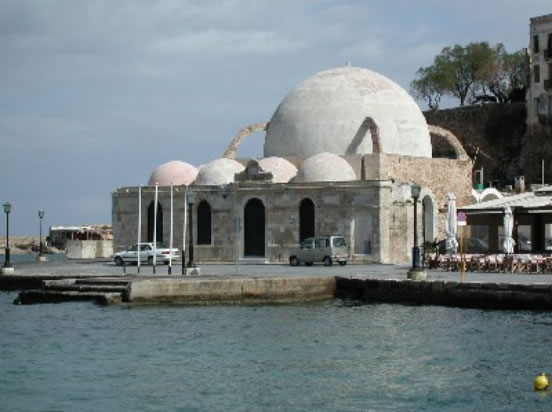
Chania
The Chania prefecture is rich in interesting sights and therefore satisfies even the most demanding visitors. TheOld Town in Chania is a big, enchanting sight itself, visited by thousands of people every year.
The city has a mixture of traces of different periods: the Venetian port, the city walls and numerous buildings of the Venetian period, the mosques, fountains, Turkish baths of the Turkish period and the beautiful city squares. Strolling in Chania, the visitors feel like traveling in time. Various architectural elements coexist in the beautiful buildings of Chania, which are lately repaired and preserved with the support of the Greek government.
If you choose Chania for your residence, there are many hotels and rooms to rent in a traditional style located in the Old Town of Chania. Interesting sights can also be found in the villages of the prefecture, which attract more and more visitors. All over the area of Chania, the Venetian, Turkish and traditional Cretan element is still present.
Archaeological museum of Chania
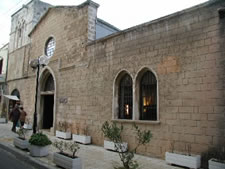
Archaeological museum of Chania
The Archaeological Museum of Chania was established in 1963 and is located in the former Venetian monastery of St Francis at 25 Chalidon street in Chania city. The museum’s collection includes finds which have been excavated from various sites of the prefecture of Chania during the last 50 years. At the eastern part of the building, showcases contain finds of the Prehistoric era whereas on the western side finds date from the Geometric up to the Roman era. All finds are exhibited according to theme or site where they were found.
Starting the tour from the eastern side, exhibits date from the Neolithic to the Late Minoan era. Most finds come from Plativolas cave. Neolithic finds from caves are exhibited in other parts of the museum as well. Caves continued to be used during the Minoan era but as sacred places rather than for habitation and Neolithic remains were used in cult activities.
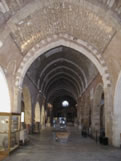
Archaeological museum of Chania
Excavations at the Kasteli hill, which lies in the heart of the modern city of Chania, uncovered finds that date from 3000BC to 1100BC. These finds are exhibited in several showcases. Some of them are connected with settlements of the Early Minoan era. It is presumed that these settlements were in contact with the palaces or that a palace remains uncovered under Chania city. Other exhibits show the Mycenaean occupation after 1450BC, when the palaces on the whole island were destroyed and so did the Kasteli settlement.
On the western part of the museum, finds of the Geometric era are few and mainly come from cemeteries. Archaic and Classical finds come from Axos village in Mylopotamos,Falasarna, Agia Roumeli and Cydonia – at the site of the modern-day Chania city. Jewelry and other impressive finds of the Hellenistic and Roman era come from tombs. Clay figurines from a Hellenistic workshop of Alexandria show the contacts among the two areas. Most clay figurines come from the Asklepieion in Lissos.
Beaches in Chania
Beaches in Chania, Magnificent beaches awarded with blue flags. Sandy beaches in South Crete, lonely small harbours and beaches in the whole perfecture of Chania.
Beaches Chania
1. Platanias

Platanias
10 km westwards of the town of Chania
The splendid sandy beach of Platanias and its aquamarine waters make it one of the busiest resorts westwards of the town of Chania. The beach is extended for kilometres round the homonym village. The visitor has the chance to view an enchanting setting with the island of Agios Theodoros in the east and the peninsula Rodopou in the west. Certain parts of the beach are particular organised and deck chairs and umbrellas are available, but in the bigger part the beach of Platanias is unexploited.
The splendid sandy beach of Platanias and its aquamarine waters make it one of the busiest resorts westwards of the town of Chania. The beach is extended for kilometres round the homonym village. The visitor has the chance to view an enchanting setting with the island of Agios Theodoros in the east and the peninsula Rodopou in the west. Certain parts of the beach are particular organised and deck chairs and umbrellas are available, but in the bigger part the beach of Platanias is unexploited.
2. Agia Marina

Agia Marina
About 5 km westwards of the town of Chania.
Along the splendid way to Kolympari, here one will meet the first from a line of beaches with sand and pebbles the region allocates. Near the peaceful beach of Agia Marina there are enough hotels, suitable to offer pleasant stay in families.
Along the splendid way to Kolympari, here one will meet the first from a line of beaches with sand and pebbles the region allocates. Near the peaceful beach of Agia Marina there are enough hotels, suitable to offer pleasant stay in families.
3. Maleme

Maleme
About 18 km westwards of the town of Chania
The beach of Maleme constitutes the extension of Platanias. The fact that it is not as equally busy and popular as its neighbouring beach, it does not mean that it is deprived beauty. The landscape is very picturesque, and allocates big surfaces of sandy beach and clear waters.
The beach of Maleme constitutes the extension of Platanias. The fact that it is not as equally busy and popular as its neighbouring beach, it does not mean that it is deprived beauty. The landscape is very picturesque, and allocates big surfaces of sandy beach and clear waters.
4. Almyrida

Almyrida
About 15 km westwards of the town of Chania
The beach of the homonym resort, Almyrida is sandy and is surrounded by pinewood. Suitable mainly for families.
The beach of the homonym resort, Almyrida is sandy and is surrounded by pinewood. Suitable mainly for families.
5. Elafonisi

Elafonisi
In south-western point of the prefecture of Chania.
The most remote beach from the town of Chania, which is however worth the the long journey you have to make in order to reach it. It is an islet almost connected with the coast since it abstains only 100m. from the beach and one can approach it by walking in the sea. Elafonisi abstains 76 km from Chania and 43 from Kasteli. Visitors come here in order to admire the astonishing sandy beaches with the dunes and the white sand and swim in the unique crystal waters. Even if the natural beauty attracts abundant visitors the region does not allocate developed tourist facilities. Elafonisi is one of the most popular beaches in Crete.
The most remote beach from the town of Chania, which is however worth the the long journey you have to make in order to reach it. It is an islet almost connected with the coast since it abstains only 100m. from the beach and one can approach it by walking in the sea. Elafonisi abstains 76 km from Chania and 43 from Kasteli. Visitors come here in order to admire the astonishing sandy beaches with the dunes and the white sand and swim in the unique crystal waters. Even if the natural beauty attracts abundant visitors the region does not allocate developed tourist facilities. Elafonisi is one of the most popular beaches in Crete.
6. Falasarna

Falasarna
About 75 km westwards of the town of Chania, in the western coast of Crete.
One of the most popular destinations of Crete, Falasarna is a line of sandy beaches with deep blue waters. Near the beach there is only a certain number of rented rooms and thus the region is not very crowded. There is a regular daily bus service from the town of Chania to Falasarna.
One of the most popular destinations of Crete, Falasarna is a line of sandy beaches with deep blue waters. Near the beach there is only a certain number of rented rooms and thus the region is not very crowded. There is a regular daily bus service from the town of Chania to Falasarna.
7. Fragokastelo

Fragokastelo
In the south-eastern corner of the prefecture of Chania, about 65 km from the town of Chania
One of the the most famous and popular localities of the prefecture of Chania, Fragokastelo is located about 15 km easternly of Chora Sfakion. Fragokastelo has written golden pages in the History of Crete. In 1828, in the duration of Cretan revolt against the Ottoman sovereignty of the island, Turkish troops slaughtered more than 600 Cretan warriors that had found shelter in the castle. From then, according to the legend, in anniversary of slaughter, the ghosts of dead warriors, Drosoulites, as they are called, are raised by the adjacent cemetery, manned as then, and they shape a procession that passes through the castle and leads in to the sea.
One of the the most famous and popular localities of the prefecture of Chania, Fragokastelo is located about 15 km easternly of Chora Sfakion. Fragokastelo has written golden pages in the History of Crete. In 1828, in the duration of Cretan revolt against the Ottoman sovereignty of the island, Turkish troops slaughtered more than 600 Cretan warriors that had found shelter in the castle. From then, according to the legend, in anniversary of slaughter, the ghosts of dead warriors, Drosoulites, as they are called, are raised by the adjacent cemetery, manned as then, and they shape a procession that passes through the castle and leads in to the sea.
8. Giorgioupoli

Giorgioupoli
About 25 km easternly of the town of Chania
A sandy beach with clear, cold waters that is extended for more than 10 km, Giorgioupoli is also one of the most popular resorts of the prefecture of Chania. Here one can find familial hotels and all the comforts and services are provided.
A sandy beach with clear, cold waters that is extended for more than 10 km, Giorgioupoli is also one of the most popular resorts of the prefecture of Chania. Here one can find familial hotels and all the comforts and services are provided.
9. Palaiohora

Palaiohora
About 70 km southly-western of the town of Chania
Palaiohora is one of the busiest seasonal resorts of the prefecture of Chania and it is located on a small peninsula, having the privilege to allocate beaches and in the two sides. The sandy beaches extend for hundreds metres and are provided a variety of services and facilities, as well as luxurious hotels and rented rooms. The beaches westwards the town are even better.
Palaiohora is one of the busiest seasonal resorts of the prefecture of Chania and it is located on a small peninsula, having the privilege to allocate beaches and in the two sides. The sandy beaches extend for hundreds metres and are provided a variety of services and facilities, as well as luxurious hotels and rented rooms. The beaches westwards the town are even better.
10. Beaches of Palaiohora

Beaches of Palaiohora
About 70 km southly-western of the town of Chania
A line from beaches with pebbles or with sand, that begins just outside Palaiohora, the main resort in the southern coast of Chania. You will find comforts and a variety of services in all the beaches, but sure the peacefulness, the crystal waters and the picturesque landscape will compensate for the any lack of comforts.
A line from beaches with pebbles or with sand, that begins just outside Palaiohora, the main resort in the southern coast of Chania. You will find comforts and a variety of services in all the beaches, but sure the peacefulness, the crystal waters and the picturesque landscape will compensate for the any lack of comforts.
11. Beaches around Hora Sfakion

Hora Sfakion
About 60 km southernly the town of Chania
Two splendid beaches that abstain about 3 km of westwards Hora Sfakion. The cute and picturesque fishing village of Sfakia in combination with the wild nature around it, make the region a special destination one should not miss.
Two splendid beaches that abstain about 3 km of westwards Hora Sfakion. The cute and picturesque fishing village of Sfakia in combination with the wild nature around it, make the region a special destination one should not miss.
12. Beach of the town of Chania

Chania
The beach of the town of Chania, contrary to the beaches of other Cretan towns, is not so much appreciable, even if the waters are clear. It is found westwards the Venetian harbour and abstains a few only metres from the old town. It is organised, it allocates deck chairs and umbrellas and constitutes a pleasant and cool break mainly for the local, after the work of a day.
13. Kasteli Kissamos

Kasteli Kissamos
About 60 km from the town of Chania
In the astonishing gulf of Kissamos, this region is characterized as a unique natural beauty, as it is delimitated by the two peninsulas of western Crete. Kasteli is not a tourist resort, but is a peaceful coastal town and the beach with the pebbles in combination with the coastal taverns constitutes pleasant bypass if you head to the western coast of the island.
In the astonishing gulf of Kissamos, this region is characterized as a unique natural beauty, as it is delimitated by the two peninsulas of western Crete. Kasteli is not a tourist resort, but is a peaceful coastal town and the beach with the pebbles in combination with the coastal taverns constitutes pleasant bypass if you head to the western coast of the island.
14. Kolympari

Kolympari
About 45 km westwards of the town of Chania
Splendid, clean beach with pebbles and deep blue waters, in the tourist resort of Kolympari, that is the last point in the line from the resorts and the beaches that are extended westwards the town of Chania.
Splendid, clean beach with pebbles and deep blue waters, in the tourist resort of Kolympari, that is the last point in the line from the resorts and the beaches that are extended westwards the town of Chania.
15. Sfinari

Sfinari
About 70 km westwards the town of Chania
In the enchanting and fascinating western coast of the prefecture of Chania, Sfinari is a coastal village. There one can find rented rooms, a few taverns, and beautiful bays with pebbles. Most visitors that visit Sfinari come for the peacefulness and the natural beauty.
In the enchanting and fascinating western coast of the prefecture of Chania, Sfinari is a coastal village. There one can find rented rooms, a few taverns, and beautiful bays with pebbles. Most visitors that visit Sfinari come for the peacefulness and the natural beauty.
16. Sougia

Sougia
In the southern coast of Chania, between Palaiohora and Agia Roumeli
A pleasant and beautiful coastal village, Sougia is in the end of an unforgettable way through the southern ending of White Mount, or at straight line from the city of Chania or via Hora Sfakion. It allocates a few, small hotels and fish taverns that in combination with the sandy beaches make Sougia one of the most splendid destinations in the southern coast of Crete worth visiting. The astonishing way to Sougia, through the mountains, is one of the most important reasons for one to visit.
A pleasant and beautiful coastal village, Sougia is in the end of an unforgettable way through the southern ending of White Mount, or at straight line from the city of Chania or via Hora Sfakion. It allocates a few, small hotels and fish taverns that in combination with the sandy beaches make Sougia one of the most splendid destinations in the southern coast of Crete worth visiting. The astonishing way to Sougia, through the mountains, is one of the most important reasons for one to visit.
17. Tavronitis

Tavronitis
About 25 km westwards of the town of
One more beach that is extended westwards Chania, the beach of Tayronitis is found in the estuary of a small river and it is relatively isolated and quiet, without a lot of services provided.
One more beach that is extended westwards Chania, the beach of Tayronitis is found in the estuary of a small river and it is relatively isolated and quiet, without a lot of services provided.
18. Stalos

Stalos
About 5 km westwards of the town of Chania
The first coastal resort that one meets westwards the town of Chania, Stalos is a typical tourist resort, with bars, hotels, renting cars services and currency exchange offices. The beach is sandy, clean and it extends for many kilometres.
The first coastal resort that one meets westwards the town of Chania, Stalos is a typical tourist resort, with bars, hotels, renting cars services and currency exchange offices. The beach is sandy, clean and it extends for many kilometres.
19. Gramvousa

Gramvousa
At Kissamos bay, west of Chania, there is a group of small islands and peninsulas of exceptional attraction. The most beautiful spots are the isle of Gramvousa and Balos beach at Tigani peninsula.
Gramvousa island with its natural and magnificent scenery and its green-blue water, attracts visitors, not only for its natural landscape, but also for its long history. The castle which is laid at the summit of the island’s mountain, captures the attention of all visitors.
20. Μπάλος

Μπάλος
Όσον αφορά το Μπάλο, το κύριο χαρακτηριστικό του είναι η γνωστή μα απίστευτα όμορφη παραλία του, πλατιά, με πολύ ψιλή άμμο λευκή και κόκκινη, όπου σε ένα σημείο σχηματίζει μια μικρή λιμνοθάλασσα.

CreteFind all routes to these beaches their location at Maps with beaches in Crete .

0 comments:
Post a Comment